Google Analytics

"... side by side with the human race runs another race of beings, the inhuman ones, the race of artists who guided by unknown impulses, take the lifeless mass of humanity and by the fever and ferment with which they imbue it turn this soggy dough into bread and the bread into wine and the wine into song..."
Henry Miller

Inventing a New Way to Listen to Music

This blog aims to expand your appreciation for song and written word together. Many of the posts have been designed to match the time of a specific song in reading length. The words of the post, together with the song you hear, will open your mind to a new way of reading and listening to music. Enjoy!

Wednesday, August 25, 2010

A skinny little thanks to Rolling Stone

In a meeting of the minds last week at BreakThru Radio headquarters in Chelsea, New York one of the BTR interns read the letter that had been printed on the back of Rolling Stone Magazine’s last issue. The letter, titled “A Big Fat Thanks to Record Execs,” was actually a reprint of a stunt pulled by the magazine giant on October 28, 2002. Back then it was through The New York Times that they reached out, publishing the letter in a full-page ad in arguably the world’s most read newspaper. Here is the letter:


While the RIAA (Recording Industry Association of America) continues with its losing battle against P2P file-sharing, media Web sites, and bit torrents used by millions, it is Rolling Stone Magazine itself that I would like to address in this article, leaving the RIAA lawsuit editorials to legal blogs and tech-y sites.


To the people of Rolling Stone—tell me you see the irony in this overly sarcastic letter appearing on the back of a “music” magazine selling copies on the coattails of Katy Perry’s rack. The issue that featured the RIAA letter had a headline that read: “Sex, God, and Katy Perry.” Other articles featured on the cover were Michael Cera (not a musician), an Aerosmith comeback (really? that’s refreshing news to the music world), and Arcade Fire’s recent album success (okay, that’s a quality music story, but how can they be ignored?). Even Rolling Stone Magazine couldn’t overlook Arcade Fire; but notice how the band isn’t good enough to make the cover. Katy Perry isthough. Clearly her album must be so much better.


The joke improves. The very next issue published (the current issue) featureseven more nudity on the cover and within the pages. This time it is the cast ofTrue Blood who are naked and splashed with vampire blood on the cover. I mean, come on Rolling Stone, they don’t even have an album. At least Katy Perry attempts music. The headlines in this issue read: “They’re hot. They’re sexy. They’re undead: The Joy of Vampire Sex."


The street cred of Rolling Stone Magazine as an accurate voice for the ever-morphing music industry began to flounder years ago. To be completely and utterly blunt: it’s become a fuckin’ joke! Their most recent issue features top stories with headlines like: “True Blood’s steamy Rolling Stone cover shoot." It also includes an article called “Vampire State of Mind," in which writer Peter Travers “breaks down the best and worst vampires of all time.” Along with, “Bono Storms Back,” a report on U2’s return to the stage after Bono’s back surgery.


Is this really the same magazine that sarcastically derided the RIAA, claiming that “[b]ecause of [them], millions of kids will stop wasting time listening to new music and seeking out new bands.” Are you kidding me? Maybe you should be asked a similar question. What have you done for new bands recently Rolling Stone?


Just look at the arrogant tone to the letter of discussion. While its message may be valid, its sender is questionable. RSM is more interested in naked photos of Katy Perry, Anna Paquin, Stephen Moyer, and Alex Skarsgård than anything to do with the music industry, especially when it comes to “new music. Under the music tab on rollingstone.com, its featured articles are about Steven Tyler joining American Idol, a new Neil Young album, and a lawsuit between an LA clothing designer called “Material Girl” and Madonna for allowing her daughter to design under the same registered trademark. Slow down on the “new music” coverage Rolling Stone, these “millions of kids” can’t read it all fast enough.


The irony is that Rolling Stone Magazine is just as guilty for marring the music industry as the RIAA. They don’t give a shit about “new bands” anymore than major record labels do. They’re only purpose is to sell magazines. And what sells a magazine these days better than slutty photos of Katy Perry,interviews with True Blood cast members, and editorials on vampires.


The millions of kids referenced in the letter on the back cover don’t even readRolling Stone. Why would they? Nothing in its pages appeals to them. Rolling Stone Magazine is nothing more than a prop to the college frat-boy bro whobuys it so he can get laid. What college chick doesn’t want to sleep with the guy who is “into music and reads Rolling Stone? The magazine has becomean ornament on the beach at Spring Break right along with a straw cowboy hat and barbed-wire bicep tattoo. I could go on with the imagery, but you get my point. There is really only one thing left to do...


Saturday, August 21, 2010

Eye One Too (3:03)

Notice I have now embedded the YouTube video right into the blog. I guess I am getting smarter. Click play and begin reading. Remember--don't stop reading once you start. You can always go back and do it again. Enjoy!


Dylan just poured snare into my coffee.

Saturday morning diner in Hell’s Kitchen and the blonde in the booth ahead of me keeps looking over. Her eyes conspire against her boyfriend’s who is flirting with his omelet. Beads of sugar rain onto the table as if searching for a necklace they were never a part of. I wonder how many nights make up a “later.”

The guilty undertaker sighs.

The lonesome organ grinder cries.

The silver saxophones say I—

Should refuse you.

But I don’t. Instead I take on the persona of all three. Counting death around me in exchange for hope. Seated alone surrounded by a staircase of keys and puddles of pedals that soak my feet. I hear blown tenor notes that I know are against better judgment. But there is harmony in discord too.

He doesn’t just want her. He wants her “so bad.” But he knows he can’t have her, and he’s forced to sing his petition to the lonely hustler on the street rather than the muse of his lyrics.

There will be no savior to the politician either. There will be no interruption. The only thing left to do is get drunk with his audience of degenerates. Yet he can’t even do this. His cup is broken, forcing the wounded wanderer to face the streets under the bleak and honest cloud of sobriety. Like Coleridge’s ancient mariner his song is ignored by the one who needs to hear it most. The up-tempo of the tune set to illustrate the street of ignorance around him rather than the weariness of his fight. Harmonica swings at the end of each chorus reminding us of the masochistic pleasure of rejection.

Honey, I want you.

The fathers of the streets are gone now. I am left alone to seek out the regular alleys for the broken angels. All I find are message-less glass bottles and cigarette butts smoked down to the filter. Daddy’s girl-daughters continue to put me down and I try not to think about it.

What is there left to do but turn back to chance? The ‘Queen of Spades,’ lady luck herself--a metaphor for putting the chips back onto the table and raising the stakes. Not to be afraid to look another “her” in the eye, even if she is the black mamba. She’s always been good to me. She sees right through me. Her and her three sisters. And no matter where I’d like to be, we both know it doesn’t matter.

Not a whole lot of choices left for our young poet. Shuffling toeless chucks through the filthy gutters, it’s either listen to the wail of the sax or be seated around the table of sharks. They’re all holding full houses, ladies over jacks, and he knows that. And yet he still musters the gusto to blow on his harp to the falling escalator of down-beat organ notes and peccadillo guitar plucks.

Everyone else in the world is dancing. Why not our singer?

Was I good to you? Was I?

Unsure of himself, he is humiliated to seek approval from her. Even though you lied. The whole time taking me for a ride. And now not even time is on my side. I march on to the beating of a silent drum invisible to the world, but what is even of more consequence is that I am invisible to reflection. A sinister cloak wrapped around my shoulders conceals me from the eyes of hope. From the ears of discord. From the vagabonds of jeopardy. From the sirens of chance. From the players of thievery. And from the arrows of Phoebus.

Sweep on harmonica. Sweep on.

Wednesday, August 18, 2010

The Vinyl Ritual


This week, Thompson Davis invited me as a guest speaker on his Thursday afternoon show Geek Out. The topic of the conversation is the age-old argument, or belief, that the best way to hear music is through vinyl. But is it really? Or is it just part of a purists nostalgic attitude that is hard to shake, like stories from a retired army Sergeant who complains that combat “just ain’t like it used to be.”


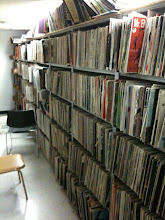
I began seriously collecting vinyl about three years ago. Like almost anyone in this trade, I started with my parent’s old collection, rummaging through the boxes of records in their basement. Like a fashion designer in a fabric factory, I flipped through each cover with intent and fury; selecting only those LPsgood enough to appear in my collection that I was determinedwould be more about quality than quantity.


Of course there is the obvious need for a record player as well, but I had that problem covered thanks to an extraordinary Christmas present from my sister (a Crosley Collegiate Stack-O-Matic—a leather suitcased beauty with built-in speakers and a seven-LP stacker). Today, my record collection has grown considerably and ranges from 1932 recordings of Duke Ellington’s band on old 78s (those super thick, ultra plastic records) to Radiohead’s In Rainbows including full digital recording technology. My new music hobby was found, and there is no feeling in the world like going through a box of LPs at a garage sale or flea market and finding a mint-conditioned Let it Bleed or Blonde on Blonde. But does thatreally mean it sounds better?


Also, you would think moving to New York City would furtherincrease this purchasing habit, but I find it to be quite the opposite. New York's music sale industry knows the large market for collectors and purists like myself, which creates a double-edged sword. On the one hand, the selection is incomparable. Record stores exist all over the city with a massive collection creating the strong chance that you can find anything you are looking for at least somewhere in this town. On the other hand, album pushers know the severity of the habit, and mark-up the prices considerably making it too easy for the addict to find the junk they are after. This takes the entire thrill out of the score. Buying a first edition copy of Thriller for $25 from Bleecker Bob’s just isn’t the same as buying the same record for 50 cents from a guy selling items out of the back of his car at a farmer’s market in small town USA.


Over the last few years, I have even managed to convert some friends. My girlfriend in Toronto at the time now has a record player and plays records, as does my old roommate/cousin. I used to think it was the sound that made records better, but now I am leaning toward another reason as to why I prefer records to digital. It is the process.


To me the difference between playing music on records and playing it through your computer or iPod lies in the ritual of the act. Playing vinyl personally involves you with the listening process, and you become a part of the whole medium of the artistic expression. The effort of thumbing through stacks of records to find the right one for the mood you are in is plentymore engaging than having Pandora Radio choose songs for you.


One also finds that they are less likely to skip songs on a record, because of the effort involved to lift the needle and find the correct space in the groove between the desired track and its predecessor. This forces the listener to hear the entire side of an album as it was intended, in order, as opposed to hitting the “skip” key on his/her computer, stereo, or listening device. As well, the “shuffle” mode is completely out of the question, and if you want to keep listening, you will have to continue to select new albums approximately ever twenty to thirty minutes. All of this involvement just for a little background music, what BTR Program Director Chris Hatzis calls “wallpaper music,” as you cook or chill in your apartment may be annoying and not worth the effort to a lot of people, especially when you do have the option for something as simple as Pandora Radio, Grooveshark, or your very own iTunes library on Genius mode.


I completely sympathize with the music lover who prefers the ease and simplicity of a digital catalogue over a vinyl one. I am extremely guilty of this myself. I probably listen to BreakThru Radio and my iTunes library, skipping from song to song, more than I do my vinyl collection. But I don’t always. It is more engaging to select records to play, especially when you have one or two people over to your place and you do it together, than to listen to Pandora and have the music your playing soon equate the camouflaged drone of the air conditioner or the water from the dishwasher.


There is also the feel of the record in your hand. Holding the actual object, admiring the artwork, and reading the, ahem, liner notes on the back ascends the music from something that is intendedjust for one sense (our ears) to a piece of art made for all thesenses: our eyes; our fingers; our taste (in the ‘preferred’ sense of the term); and even our noses (like the smell of old books. Who doesn’t love the smell of old records?).


Ultimately, there is the sound an old record makes that helps conjure the idea that the recording sounds warmer or softer, orthat the device playing the recording makes it ‘sound’ better. The word ‘better’ is so subjective that the argument becomesimpossible to win and therefore shouldn’t even be had. As Chris Hatzis discussed with me in a casual conversation a few weeks ago, the argument that records “sound better” is just a music purist’s myth. The recording technology is just that much better at picking up and amplifying every single sound, not to mention the software affects that can be added. If we can dispel the idea that a scratchy undertone to a song makes it better, then the argument for analog over digital is moot.


However, the argument presented here, the physical and mentally involved process that goes into the selection and playing of music through a record player, holds fast. There is nothing passive about flipping though a pile of albums, coming across an old beauty you forgot about or haven’t heard in a long time, and then maneuvering the needle over the rim of the vinyl until you hear that vintage needle sound through a set of old mono speakers. It is that moment, the ritual, that makes listening to records “sound better” to some, than the click of a mouse.


(For anyone interested in looking at Crosley Turntables as mentioned in this article, CLICK HERE).

Monday, August 16, 2010

Another BreakThru Radio Parody Trailer

Here is the next parody trailer from BTR -- Independence Day. Also really well done.

To compare to the real trailer, click HERE.


Saturday, August 14, 2010

BreakThru Radio Pi Trailer

BreakThru Radio, a station I write and DJ for here in New York, is launching their new Web site on September 6th. The new site is going to be lightyears better than the existing, and we are all very jacked about it.

As part of the promotional material, the video team at BTR has made a number of "parody trailers." They are very good. Check this first one out below. It is rip on the trailer for the 1998 Darren Aronofsky film Pi. To see the actual trailer of that, click HERE. That way you will get a sense of how great of a re-make this short film is.

There will be more "parody trailers" to come.


Friday, August 13, 2010

Mar Thee Craw (2:43)


This song starts like you forgot something, but you just aren’t sure what it is.

Bam. Bam.

Don’t worry; it will roll back to you, right after this saxophone punch:

Hit.

We’ve added some snare drum to keep the spirit of travel alive and the piano roll is like a walk, reminding you of the primitive need to wander. Just listen to how those ivory keys keep turning over on themselves like the paddle wheel of an early steamer floating on down the ole Mississipp.’ You’re now aboard this river expedition; only you don’t know where it’s headed.

Oh well, when in doubt – whistle. Whistling always makes a man feel better.

Four notes down the scale.

Repeat.

Now walk back up but with pep in your step.

Whistle again.

You should be feeling the rhythm by now. You should be feeling the good vibe and it should be obvious that you are on a steamer full of celebration. Everyone on board is excited and has waited a long time for this and what waits at the end of this riverboat fantasy is just the beginning, and not an ending at all.

“So where are we goin’?”

Allow Professor Longhair to tell you.

That’s right--it’s Huckleberry Finn the dyslexic version. New Orleans, the Mardi Gras, now that’s a party. And I’m not talking about the Mardi Gras that is today, full of college bro’ douchebags with their smart phones out to get as many titties on camera as possible, or drunken sorority sisters screaming high pitch shrieks, demanding the local bars play the Twilight soundtrack showing no respect for the tradition of American music. I’m talking about Mardi Gras when it was a carnival, and not a televised event.

Professor Longhair is from Bogalusa, Louisiana (yeah--say that again: Bo-GA-Lew-SA). He wrote this song in 1949 and used to feature it at the Caledonia Club in New Orleans. But that isn’t what you’re hearing now. Ten years later he revived it, adding a more rhythm and blues element making the one playing.

When you get to New Orleans somebody will show you the Zulu King.

Today, that King is Professor Longhair himself. He is the Captain of our riverboat, as well as the tour guide, piano player, and card shark at the five-stud table. He invites us on a journey with him as his special guests, forecasting what will become if we just have the nerve to roll on down the river with him, placing our faith in what he has to say about it. He promises with certainty what is going to happen, opting for the infinitive “will” rather than the unsure “may” as verb choice.

Sorry Professor. My bad. Go ahead and whistle for us:

(listen. and maybe dance in your chair a little bit. i’ll wait for you, don’t worry)

Has that whistling ended yet? No? Then stop reading for a second…

(Don’t you just love that a cappella whistling? Hittin’ them high notes like he does?)

Aright, c’mon back to me for the fade out.

Now do yourself a favor: Go back and play this song again from the start, it’s only two and a half minutes long. Only this time play it without reading this. Just replay the tune, turn it up, and get yourself in that Mardi Gras spirit.

I’ll see you in New Orleans.

Wednesday, August 11, 2010

The Sibling Effect

I know it has been a while since I posted anything. Just like everyone else out there, the last couple of summer weeks have been pretty busy for me.


I am now back in NYC after a few glorious weeks in Muskoka. Spending some time with my family at Gibson Lake helped inspire this week's Liner Notes editorial for BreakThru Radio. I hope you enjoy:


Have you ever seen the film Almost Famous? Do you recall that scene where a pre-teen William Miller (played by Michael Angarano) stands on the front lawn of the Eisenhower all-American dream home next to his overly protective mother, observing his older sister’s rebellion against what he considers to be a perfect familial setting? He struggles to comprehend his eighteen-year-old sister’s instinctive desire to break-free. Sean William Scott, an unknown at the time, encompasses the image of a late 60s rebel, loading boxes of his new girlfriend’s belongings (played by another unknown actress/singer at the time—Zooey Deschanel) into the trunk of his brand new Chevy. The sister looks back towards her old home, sympathizing with her confused little brother. She then approaches him, looking him (us, the lens) deadpan in the eye:

“One day, you’ll be cool,” she promises. The older sister then pulls her little brother close to her and whispers in his ear, “Look under your bed. It will set you free.” Simon and Garfunkel’s “America” plays in the background. A warm embrace ensues, before she runs to the car and her new life of freedom ‘on the road.’

Of course, for anyone who has seen the film, we all know what the little prodigy finds under his bed—a leather case full of LPs: Pet Sounds, Live Stones, Zeppelin II, Hendrix, Cream, Joni, Blonde On Blonde, and finally Tommy—which comes accompanied with a hand-written note from the older sibling that reads, “Listen to Tommy with a candle burning and you will forever see your future.” Cut to high school five years later—William Miller is cool.

I was raised in a family of four children. But what made this extraordinarily interesting is how close in age the four of us were—only two years and eight months separate my older brother from my younger, my sister and I falling somewhere in between. Although together in high school for a few years, there was the one-year that my older brother and sister were part of the high school scene while my younger brother and I were still in grade school. It was during this time that my sister started dating some of the sophomores and juniors at the school, plunking her in the middle of my eldest’s renegade crew. I guess it is fair to say they began to discover music, if not together, at approximately the same time.


I can remember being in the eighth grade and inserting blank tapes my father had purchased into my parent’s stereo system in our family room to record directly off the radio, DJ overdubbed intro included. In 1989, it was all about listening to the Top Six at 6:00, aiming for chart-poppers “The Humpty Dance,” “Let Your Backbone Slide,” “On Our Own” (the new Bobby Brown track from Ghostbusters II), and “If I Had No Loot” by Tony! Toni! Toné!. My parents had this high-tech stereo system that was capable of such technology that our measly bedroom clock radios could not compete with. As I anticipated which songs I wanted to ‘tape,’ I’d fiddle with mixer and amp settings, my mother always there to remind me “not to mess anything up” on her beloved new stereo system.

I can also remember, once having captured such musical wonder, lying in bed late at night with my sister’s tiny tape recorder, playing Maestro Fresh Wes over and over and over again; furiously writing down lyrics so I could commit them to memory and rap along with him at the next Safety Patroller Dance, increasing the value of my ‘rad’ stock.

[To venture off course a little bit, I feel I must share what I just experienced: The power of memory is funny, or shall I say just pure incredible? As I wrote the last sentence I couldn’t resist the urge to go on Grooveshark to hear the said track. As soon as the first a cappella tri-lined rhyme came through my speakers (“This is a throw down, a show down. Hell no, I can’t slow down. It’s gonna go—down. First Offense…”) the words flooded back to me. Yes—twenty-one years later and I can still rap the entire song word for word. Embarrassing or empowering?]

Back to the point…

Somewhere during my days of imitating Canada’s newest and only Hip Hop voice, I noticed a large collection of old records kicking about the same aforementioned stereo (which had an amplifier and mixer that hooked up to a brand new LP deck—just try to fathom the pure awesomeness of that technology!). I don’t remember the exact day I discovered the dusty cardboard sleeves kicking about, but I can remember as close as to the month it happened, and I can certainly remember the suspended moment in time, when I stopped, got onto the floor, and began thumbing through a canon so foreign to me I may as well have been looking at somebody else’s family photo album.

Who is this funny looking boy-faced man with dark Einstein hair and a motorcycle tee shirt? What’s with this glass prism on black, a light shining into one side and a rainbow coming out the other? Why is this black dude lighting his guitar on fire dressed like Merlin? What the hell is all of this?

You see, the four of us kids had an uncle, my mother’s younger brother, who had a DJ business in the seventies called Simple Motion. I later found out that my sister had contacted him asking to borrow some of his records as her own music-discovery was beginning to blossom (inspired by a long-haired, acoustic guitar-wheeling, high school senior named Jeff no doubt). All of a sudden I was surrounded by concepts and ideas I had never known existed. Sure I had heard the words “Bob Dylan,” “Neil Young,” “The Doors,” “Pink Floyd,” “The Velvet Underground,” and “Led Zeppelin” before, but they held as much weight as former Presidents and historical battlefields. Saying names like ‘Bob Dylan’ or ‘Neil Young’ was like saying ‘Lyndon Johnson’ or ‘Richard Nixon;’ hearing the couplet ‘Pink Floyd’ was no different than hearing ‘Agent Orange’ or ‘Green Beret;’ and locations like ‘Woodstock’ or ‘The Village’ were synonymous with places like ‘Normandy’ and ‘Vietnam.’ All of the above are terms a pre-teen knows to be historic and is aware he/she should recognize, but lacks the intelligence and knowledge to separate the meaning from the expected recognition.

Later that year (or perhaps it was the next) my older brother received the brand new Led Zeppelin Four-CD Boxed Set for Christmas. When he wasn’t home, I would sneak the discs out of his room to play upstairs through headphones so no one else would know I was stealing from my brother. At the same time, my sister continued to receive mixed tapes from older high school boys, compiled of more Dylan, CSNY, Beatles, Pink Floyd, and Paul Simon as if meant to impress and woo her (a courting tactic I would later imitate to a tee, while preying on the of unaware desires of ninth grade female innocence). Her tapes too, I would sneak out of her room to hear while she was out discovering alcohol and bush parties.

Needless to say, that summer the curtains of pop-radio had forever been torn away from the window. I never went back to recording The Top Six at 6:00 again. Like Alice, I had fallen into the spiraling hole of musical Wonderland and began a downward tumble into the history of American sound. Unlike Alice, my fall was without flap and has yet to stop. It is more like a descent into the depths of an ocean with a diver-like grace. It isn’t head over heels panic, full of disillusionment, but rather natural and fluid, with the freedom to get off along the way and explore tunnels branching away from the core tube.

Currently, I am getting my master’s degree in the history of American music and I DJ on two different radio stations here in New York, as well as write on music for other numerous outlets. I am also applying for a Ph.D. in the same field. I can’t help but wonder where I would be if it wasn’t for my older brother and sister (and by association, uncle) placing that music right under my nose so many years ago. I think it is part of our nature to like the music one likes, the corner of pop culture one finds themselves in, is into the fashion, film, sports, or whatever someone admires, because of an older sibling influence. Adolescence wears that inseparable cloak called ‘impressionable’ for a long time before being able to shed it completely and waltz society confidently naked. Naturally, younger brothers and sisters are out to earn the respect of an older one, and are constantly imitating that which they observe. For me, it was through music. If Greg and Kelly were going to listen to Zeppelin, The Beatles, and Dylan, then so was I.

Today, I am only left to take pride in the fact that they may now come to me for musical guidance. I just hope I don’t let them down and can offer them as many windows into happiness through music as they presented to me over twenty years ago. I can’t even begin to imagine what my life would be like today had I not “looked under my bed, to be set free.”