Check out this article on BTR written by one of their writers. It references my thesis work quite a bit.
Wednesday, January 12, 2011

Wednesday, December 15, 2010
Smoking and the Image of Cool

How many of you, for those who are smokers or were smokers or at least have ever tried smoking at some time or another, did so for the first time in some sort of live musical context? There is a relationship between music and smoking that together forms this iconic image of a cool renegade; a badass rocker decked out in subcultural fashion trends of the day, hacking on a cigarette as a symbol of independence, adult-status, and resistance. Or at least there has been for years. Our knowledge of the health dangers and threats to smoking are, I believe, having a positive effect on young peoples’ decision to not smoke cigarettes. There is another side to the coin, however, one that shines a little irony in the face of the noble marketing effort, and that is: the more successful anti-smoking campaigns have been at promoting the idea that smoking kills rather than looks cool, the more the marginal youth seeking to resist all forms of mainstream society is tempted to indulge in the targeted habit.
I would love to be able to survey all the readers of this article and ask, “what exactly came into your head when you read the title of this article? What image popped into mind? Was it a particular musician sitting there with a cigarette dangling from his lips while he soloed away on his Stratocaster a là Keith Richards or Jimmy Page? Was it an iconic black and white image taken from the golden age of the jazz years in Harlem—Lady Day standing at the mic in a smoke-engulfed Minton’s or Thelonious Monk sitting at the piano with an ashtray and burning cigarette next to the high C? Was it a badass Sid Vicious, Patti Smith, or Joey Ramone leaning on the brick outside of CBGBs, one knee bent with Chuck Taylor flat against the wall—the cigarette signifying the ultimate “Fuck You” to both the camera and you, it’s viewer. Or was it a solemn and lonely Tom Waits or Willie Nelson, playing to a crowd of four on a chicken wire and Christmas lights lit stage in a roadhouse somewhere off Highway 87? Regardless of what your vision was, in my opinion there is a certain romanticism and genuine hipness to the scenes I just laid out for you that is emphasized by the cigarette. I don't think you would be reading this blog if you felt otherwise. Replace the cigarette in each image with a carrot juice, and let's face it, the icon just lost its majestic power. Where is the "edge" in a vegan shake?
(As a side note: Did you ever stop to ask where the cigarettes are in hip hop, soul, classical, or pop music? It’s strange how some genres of music embrace the cigarette while others seem to abandon it altogether.)

Enough of the rock stars; let’s shift to the crowd. In an article written by Columbia University professor of Ethnomusicology Aaron Fox, the Dean of the Department contends, “[M]usic is like a cigarette…. ‘[they] are bad [and] that’s why they are good.’” Fox argues the disdain for smoking lies in the contradiction of a cigarette – what makes it so desired is the fact that it is so shunned against. This is precisely why smoking a cigarette becomes, what Fox calls, a ‘sublime’ act; because of our learned hatred for this small object we are taught will kill us, it exists in our conscious as an object representative of intense desire. In the case of the rebel, that desire gets inverted and becomes a desire “for” rather than a desire “against.” This passion for the subversive signifiers a cigarette instills is similar to the passion youth hold for specific musical genres as well; hence the marriage between the two forms is born. Being a member of a deviant subculture that is only admired by those within its sphere, and accordingly hated by everyone else, perpetuates the individuals desire for taste and expression of that said membership. Therefore the music, like the cigarette, signifies an embracement of those abhorred symbols – it’s good to love what is bad to love.
Fox takes the analogy of smoking and music one step further. “Smoking in a group of smokers is profoundly sociable,” he claims. Let us not forget our history of tobacco and remind ourselves that smoking came from Native Americans who would share pipes as part of a communal, social event. Music only enriches the experience of this gathering. Here, I find it necessary to quote Professor Fox at length: “The sociability of smokers is mediated by elaborate rituals of offering cigarettes to others (or conversely, “bumming” a smoke), of handling cigarettes performatively, of lighting both one’s own cigarette and those of others, and of organizing the rhythm of conversation around the rhythms of smoking.” This adds to the perception of “cool” especially for the impressionable adolescent who admires and emulates his/her elders of the same subcultural medium.
To the chagrin of parents, medical professionals, and anti-smoking campaigners worldwide, I argue that, as unfortunate as it may be, smoking as “cool” is an image that will never fade. In fact, like many social tropes, the more smoking is pushed to the margins of mass society the more it will be sought after as a symbol of the anti-normal. The only silver lining in all of this may lie in an argument supporting the necessity to address global overpopulation.

The citations for this article were from Aaron Fox, “White Trash Alchemies of the Abject Sublime: Country As “Bad” Music,” in Bad Music: The Music We Love to Hate. eds. Christopher Washburne and Maiken Derno (New York: Routledge, 2004) pp. 39-61.
Wednesday, December 1, 2010
Dial up the Bunnies
I know the following has little to do with music and culture, but it does have to do with the Internet, which has changed the way we receive and listen to music. I was asked to write an article about the first time I ever went online for BreakThru Radio as part of their "Communication" theme week. Perhaps, after reading this, you will end up thinking about your own discovery of the Internet and the very first Web site you visited.
~~~~~~~~~~~~~~~~~~~~~~~

In the fall of 1994 and I was taking a 12th grade law class even though I was still in the 11th grade. The reason for this was that the teacher, Mr. Regan, had a reputation for being not only an excellent instructor of law but also one of those faculty members who was “in the know” with all the up-and-coming stories going on outside our small community bubble in northern Ontario. He was a man who was educated at Notre Dame University (a far-reaching impossibility for students in my high school) and a teacher who participated in cultured/educated practices like reading The New York Times every day and subscribing to The Economist and The New Yorker. He was a true “mover and shaker” long before Larry Page and Sergey Brin had even thought about their Stanford dissertation.
I remember sitting in the portable classroom and listening to him try to explain this new computer “thing” (I am almost positive this was the noun he used to describe it) called “the world wide web.” Only one girl in our class of about 30 had any notion of what he was talking about, as she told the class her father had already made appointments to have it “installed” the following week. As I recall, the way Mr. Regan explained it to his class was that the Internet (“Sorry. The what?”) was like a library in your computer. As unbelievable as it was, one was now able to visit different places to read written content and look up pictures taken almost anywhere in the world all from home and through a simple PC. “Think of it like a million books inside of your computer,” were his words.
It sounds almost ridiculous now; but how does one go about explaining this concept to a group of 17/18 year-olds most of whom had only been on a computer a handful of times, and out of that, only to type an essay or play a game. The concept of “online” was as foreign to us then as the concept of solar energy is to Republicans now.
Trying to wrap my head around it as a 17 year old, I realize now that it was the verbs “visit” or “go to” that confused me the most. I just couldn’t understand how one could operate a computer to “go somewhere.” Has the computer somehow become some sort of teleportation device? “This is freakin’ AWESOME,” were my most immediate thoughts.

Less than a year later, my parents were on board. Trust me when I tell you, for those of you too young to know life without the Internet, this thing took off like a forest fire. One day you were sitting in a classroom trying to make sense of a concept that places a worldwide library inside your computer, and the next you are sitting in front of your Compaq Presario 486DX2 listening to the sound of digital fibers rub up against one another like wounded crickets in a dying attempt at a mating call inside of a snowy television set.
It was a Friday night and my parents had gone away for the weekend when I lost my web browsing virginity. As you do in high school when the folks leave home, my brother and I had a small get together of friends to drink Olde English and play euchre around the kitchen table. Only this time, the drinking led us upstairs where our family computer sat in my sister’s room. One of my friends was well on his way to establishing himself as a tech-nerd (he is now a Senior Vice President of a banking IT division that designs and develops algorithms for Mutual Fund management) and was going to give us other athletic hooligans our first taste of the online world. He showed me how to disconnect the phone line from the wall and plug it into the back of our brand new Compaq (“A computer with a telephone jack? What the F?”). He then demonstrated where to click in the bottom of the screen to prompt the connection between computer and landline. My buddies and I had little patience for the tiny blue light that moseyed its way back and forth between computer icons waiting for something to happen. After a full beer and a few shout outs of, “this suuuuucks” and “dude, are you kidding me with this?” the green light was lit and we were on our way to being “connected to the whole world.”

The next step in my friend’s futuristic hacking abilities was to “double-click” on this picture of a shipping helm that sat on the desktop of the screen. After a few loading minutes, a new “window popped-up” and there was apparently “an address bar” at the top (recall: all of these terms are in quotation marks because they were so foreign to me/us at the time, we had no idea what my wiz-kid buddy was talking about. He was using a language none of us had ever heard before). “Are we in yet?” the group of adolescent fellas all wondered like a band of thieves who were trying to crack a safe. The loading Netscape home page had yet to produce a thing other than a taskbar and scroll bar--two features none of us had ever seen before.
Some things about the Internet will never change – they may have gotten a lot better – but they will never change. My reason for this quick digression away from our story is to prompt the question to the reader: “What Web site do you think a group of 17 year-old boys would first visit while drinking on a Friday night in a parent-less house?”
My friend explained that we had to type in “www” which stood for “World Wide Web” (“Woooaaaa. Cooooool!” we all gasped) and then the “address” of the place we wanted to visit. Apparently, we could type in anything (this was long before search engines were popular. You used to have to know the actual http address of the site you wished to visit in order to get there more quickly).
Then my friend hit the keys: w. w. w. p. l. a. y. b. o. y. .. c. o. m.
“Awesome dude!”
“Are we gonna get in trouble for this?”
“What if the cops come?”
“Will my parents know I looked at this? How do we delete it?”
The anticipation and adrenaline rush of the Internet was thrilling. What was going to happen? For all we knew the most recent Playmate of the Month was going to step out from the monitor of my computer screen and start asking us for i.d.
I can remember the page taking many minutes (which felt like hours) to load. First, the background color would appear; then the logo at the top. Next was the written content, which practically appeared word-by-word. There were very few images on homepages back then, as it would slow down the page download time way too much. To see an actual image, you would have to click on the “thumbnail” and it would reload a page. This could take several, and I mean SEVERAL, minutes. And the photos wouldn’t load top-down the way they do today either. The entire image would appear on the screen as one large blue-gray, out-of-focus mash. As minutes passed, the pixels would slowly become more defined and into focus. It was a bit like looking at a magazine through dirt-filled, foggy lenses and having them rubbed clean one swipe ever 2-3 minutes until you could make sense of what you were supposed to be looking at. After about five minutes, you could start to see an image that resembled skin tone and a female figure, and after about ten, you finally had a clear picture of a nipple.
It has been sixteen years now since my first Internet experience. Yesterday, I video Skyped from my iPhone while walking down Broadway in New York City to a friend of mine who was sitting at Heathrow waiting to board a flight. It is almost inconceivable how far, and how fast, the Internet has evolved. There is no arguing that it has literally changed the way we live and communicate.
For those readers who are now only 17 and using the Internet as a daily source of social nutrition, I wonder what you will be writing about in sixteen years? What will you be describing as archaic and unbelievably vintage? And just how will you be doing it?
In sixteen years from now, I wouldn’t be too surprised if you just hook up some nodes to your temples and think about what you want to say. The software program will write the words itself, translating your thoughts to text in seconds.
Monday, November 29, 2010
What is a Hipster?

For those of you who frequently check in with the inhuman ones, I apologize for my recent lack of content. I could spend the next 50 words griping about why I am unable to get anything up on this blog right now, but I will save you the pathetic self-pity.
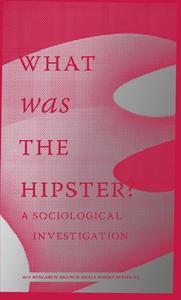
Last week, I read a book that is being sold out all over in New York City titled "What Was the Hipster?" The book is a follow-up to a panel/academic conference held at The New School in April 2009 and was coedited by Professor Mark Greif. Mark is an amazing cat--he did his undergrad in literature and history at Harvard, Master's at Oxford, and got his Ph.D. in literature from Yale.

I sat down with Mark to interview him on hipster culture and we had a very interesting conversation. The book is so good, it inspired me to abandon one of my research topics here in my final semester to take up trying to answer the following question that has puzzled me about hipsters: "Why is this the one (or at least, first) subcultural movements of which its members wish to deny being a part of?"
Being called a "hipster" is an insult to most. The Onion captured it best in a witty article heading; "Two Hipsters Angrily Call Each Other 'Hipster'." Hipster culture is a fascinating topic to me and this week's Book Talk on BreakThru Radio was the best show yet.
I implore you all to take some time (the show is 60 minutes in length) and listen to Mark discuss what he and his co-researchers have discovered about hipsters in 2010 (especially if you deny being in the category yourself--this means you and all your hipster friends Eugenia). And, if you like what you hear, go and buy his book ("What Was the Hipster?").
Click HERE for the show.
Tuesday, November 23, 2010
Facebook Privacy: The Canary In The Coal Mine
For anyone who uses Facebook (in other words, all of you), you should really check this article and 3-minute video done by one of our staff who also works for The Huffington Post.
This shizzle is real; and scary as hell!
Wednesday, November 17, 2010
If There’s No Father to His Style, Call Him ‘Bastard’

“To the public he was known as Ol’ Dirty Bastard but to me he was known as Rusty. The kindest, most generous soul on earth."
Cherry Jones, mother of ODB
This past Saturday (November 13) marks the sixth-year anniversary of the death of Russell Tyrone Jones, the rapper more famously known as Ol’ Dirty Bastard. Strangely enough, on this past Monday (November 15) he would have been 42.
It is a daunting task to try and write a thousand-word obituary on a man one hardly knows anything about. Sure, I remember playing basketball to Wu Tang Clan tracks when I was in high school; but that was only as a result of high pressure and a lot of persistence from a very close friend of mine who demanded his hip-hop CDs get as much play time as my overdone, and inappropriate in comparison, classic rock repertoire. It was not long before I began to recognize my own closeted affection for the Staten Island collective. Soon thereafter, and much to the surprise of my good pal Chris, I was requesting the Clan each time we got into his truck to head off to football practice, drink rye and gingers at a bush party, or cruise the ‘dangerous’ redneck streets of my hometown. What was this kung-fu stuff? I didn’t have a clue, and I didn't really much care.
What I did know was narrowed down to two indisputable certainties: 1) I had no idea what this guy was rapping about, and couldn’t relate to any of it. And 2) It didn’t matter, because "oh baby," I too, “like it raw.”

The thing about a guy who comes onto the scene under the moniker ‘Ol’ Dirty Bastard’, and backed by a group called ‘The Wu Tang Clan’, you would assume presents an immediate problem to his listeners. And while for a while, I felt guilty for once thinking this way, the more I learn about ODB, the less guilt I feel. Shock was his modus operandi--the idea that people didn't understand him, but stopped to look and listen anyhow, was exactly the entertainment value he was trying to achieve. It was a style that would separate him from just about all of his contemporaries. I speculate that the reaction I got from his music was the very response he was looking for. He wanted his audience to hear his music and watch his performances in a “what the fuck just happened” state of disbelief.
A case in point (his most famous case, to be exact):
During the fortieth Grammy award ceremonies (1998) in Rockefeller Plaza, Dirty jumped onto the stage to interrupt the “song of the year” recipient speech in a state of full- consciousness of what he was doing. His intention became his desired result. You see, in 1998 the Grammy’s had still not recognized the rap-portion of the show as a television worthy event; and this pissed Dirty off. Frustrated that the awards for hip-hop artists were handed out a day earlier, during a non-televised ceremony, ODB took advantage of this moment to share with the rest of the country his sentiments for the injustices of a biased music industry. While many viewers saw it as a form of “distaste,” others applauded Dirty for his stance against racial prejudices in a country and industry that is supposed to be a leader in the disintegration of exactly that. In 1998, were organizers and leaders in the American Music Academy really that much in the dark about a genre of music that was over two-decades old and, by then, deeply immersed in American culture? If so, Dirty sure rattled them to attention.
A lot can be said about the life of Russell Tyrone Jackson that this article does not have the time nor space for. (As a side not, if you are interested I suggest Digging for Dirt: The Life and Death of ODB by Jaime Lowe, which was the primary research source for this article). I could have spent much of my time filling you in on all of his sexual escapades that led to fatherless and unsupported children. I could have gone into detail over his trouble with the law, time spent in and out of US’s notorious and discriminatory prison system, and the somewhat lengthy criminal record he managed to acquire over his thirty-five years in this world. Finally, I could have discussed his personal battle with drug and alcohol abuse, supposed and much disputed mental instability, and the official cause of his death: “Accidental overdose from a lethal combination of Tramadol [a painkiller] and cocaine.” But none of this gets down to the core of the man known as Ol’ Dirty Bastard.
Time is the ultimate equalizer. The further we move away from nineties hip-hop, the more we come to recognize it as a major player to a much greater subversive trend. What we often fall guilty of when thinking about these acts of subversion is that it is individual ‘people’ who make the parts to these cultural shifts; they don't just happen on themselves. Ol’ Dirty Bastard was one of those people. In other words, while our language is mostly predicated on the idea that ‘hip-hop’ now stands alone as a viable, sustainable American culture, independent from other subcultures like country, punk, indie, metal, etc., we should be thinking about the people that made it this way. It wasn’t some anomaly born out of thin air. It was a culture built on the character and styles of artists and performers like Russell Jackson.
Alas, forget my self-prescribed verbose haughtiness. It is said much better in the vernacular of the culture:
“What’s the world without Dirt? Just a bunch of fuckin’ water.” Rhymefest

Wednesday, November 10, 2010
Inverted Ballet

I am not sure how many of you are aware, but there is a new ballet running in San Francisco that is choreographed entirely to music by The Shins. It has been playing for about five weeks now and has received some fairly strong reviews. This is precisely the cross-fertilization of traditional music genres I am glad to see these days. Despite my personal disdain for ballet, I admire anytime musicians and choreographers seek to remove the limits of what is expected in separated music mediums.
As for me, my interest in this particular crossover can be tied to the fact that it involves: a) a band I happen to like very much; and b) a form of musical representation in which I really have no time for. So I wonder which of the two will dominate my subjectivity to taste? I also wonder: Why The Shins? Or more specifically: Why Oh, Inverted World (the Shins album to which the dance is performed), and why ballet?

To place the performance in context for those who enjoy details, the world premiere of Oh, Inverted World – the ballet, is choreographed by Trey McIntyre as part of San Francisco's Smuin Ballet’s fall/winter program that runs October 1, 2010 through February 27, 2011. This isn’t the first time that McIntyre has flirted with pushing the boundaries of Smuin’s bill. According to one reviewer, “McIntyre has proven time and again that he can create innovative work set to any music.” Just this past summer, “McIntyre followed Felix Mendelssohn’s Wedding March with Queen at Jacob’s Pillow Dance Festival. His company also performed Wild Sweet Love, choreographed to a medley that featured The Partridge Family, Lou Reed and Roberta Flack. McIntyre is as comfortable with Beethoven as he is with Beck and The Beatles, or in this case, The Shins.”
I have not seen the ballet as it is only being performed on the West coast and I live on the East. Therefore, despite the look of its nature, this week’s Liner Notes is not a review of musical performance. Rather, my focus here is to comment on how popular music (or indie music, or rock and roll, or whatever you want to call it) fits into traditional bourgeoisie musical representation. What is San Francisco’s Smuin Ballet Company trying to tell its audience by performing a ballet to music recorded nine years ago by a very well known indie band from Albuquerque, New Mexico? Or conversely, what are The Shins saying to their fans by allowing Smuin to go ahead with the project? Perhaps they are trying to say nothing, and academic analysts like me look way too long and hard at this sort of stuff. But I doubt it. What’s the point of musical performance if there is no artistic message?
My initial reaction to reading this piece of ‘noteworthy popular music news’ was to try and avoid, “the endless opportunity for cliché” (a phrase I stole, it should be mentioned, from Stav Ziv--the ballet and dance reviewer for The Stanford Daily who wrote a very good review of the performance). I too, like Ziv, often “cringe” at these crossovers between rock/pop and traditional European dance performance. To be completely honest with you, I am not a giant musical/dance supporter in any form, and the mixture of rock in theater usually leaves me with a bad taste in my mouth (for example, American Idiot by Green Day. Ugh, “shudder”). But the reviews of Oh, Inverted World have me second-guessing my own musical snobbery. The Smuin Ballet Company, it is reported, has “distinguished itself with energetic, playful and accessible choreography.” Ziv goes on with his praise: “The program is worth a trip … even if you’re not a bunhead yourself” (I had to turn to the urban dictionary for this one. A “bunhead” is a term for a ballet dancer, either affectionately or used to imply a degree of snobbery).

The Shins
I feel that indie meeting ballet (ahem) dances with the line of the contrivable. Is this Smuin’s attempt to tap into the youth market currently caught up in today’s reality trash television programs like So You Think You Can Dance? and Dancing With The Stars? Or is it an honest attempt by choreographer Trey McIntyre to express an indie album in fluid, body movement? Perhaps it is a bit of both (although I am sure McIntyre nor Smuin would ever admit to the former, even if it were true).
Regardless of whether I ever see the ballet performance or not, now knowing that the music has been put to a ballet, and watching a snippet of the performance on YouTube, I don’t think I will ever hear the album Oh, Inverted World the same way again. It does not surprise me at all that a band like The Shins would agree to the idea. After all, this is the band who lent a large chunk of the soundtrack to Zach Braff’s risky, and yet quite successful, endeavor Garden State back in 2004 when very few mainstream people had ever heard of them. But ballet just isn’t what I think of when I think ‘The Shins.’ And The Shins just aren’t what I picture when I see tights and pointe shoes. At least, not before Smuin.
Oh, what an inverted world!
Subscribe to:
Posts (Atom)